
How Different Garage Doors Achieve Better Thermal Insulation
Date: 09/07/2026
How Different Garage Doors Achieve Better Thermal Insulation
A garage door covers one of the largest openings in a building. Its construction can therefore have a noticeable effect on indoor temperature, energy use, condensation, and everyday comfort. This matters not only in a residential garage, but also in a workshop, showroom, warehouse, fire station, or other commercial space where the door opens frequently or separates conditioned and unconditioned areas.
Not all garage doors control heat transfer in the same way. A galvanized steel sectional door relies mainly on an insulated panel core. A full-view aluminum glass door depends on both its frame and glazing specification. A flush-mount clad garage door can use an insulated backing panel beneath the exterior cladding.
This guide explains how these three garage door types can be configured for better thermal performance, as well as the practical trade-offs involving weight, hardware, appearance, and cost.
What Makes a Garage Door Insulated?
Garage door insulation is a complete system rather than a single material. Four parts have the greatest influence on performance:
- Door panels:Solid panels can contain an insulating core that slows heat transfer.
- Windows or glass sections:Insulated glass reduces heat loss compared with a single pane.
- Frames and panel joints:Metal conducts heat, so frame design, joint construction, and perimeter seals all matter.
- Weather seals:Bottom seals, side seals, and a properly fitted top seal help limit air leakage around the closed door.
The commonly quoted R-value describes resistance to heat flow, while U-factor describes the rate of heat transfer through an assembly. These figures are useful for comparison, but they should be read carefully. A panel-only value does not always represent the performance of the complete installed door, especially when the design includes large glazed areas.
1. Galvanized Steel Sectional Garage Doors
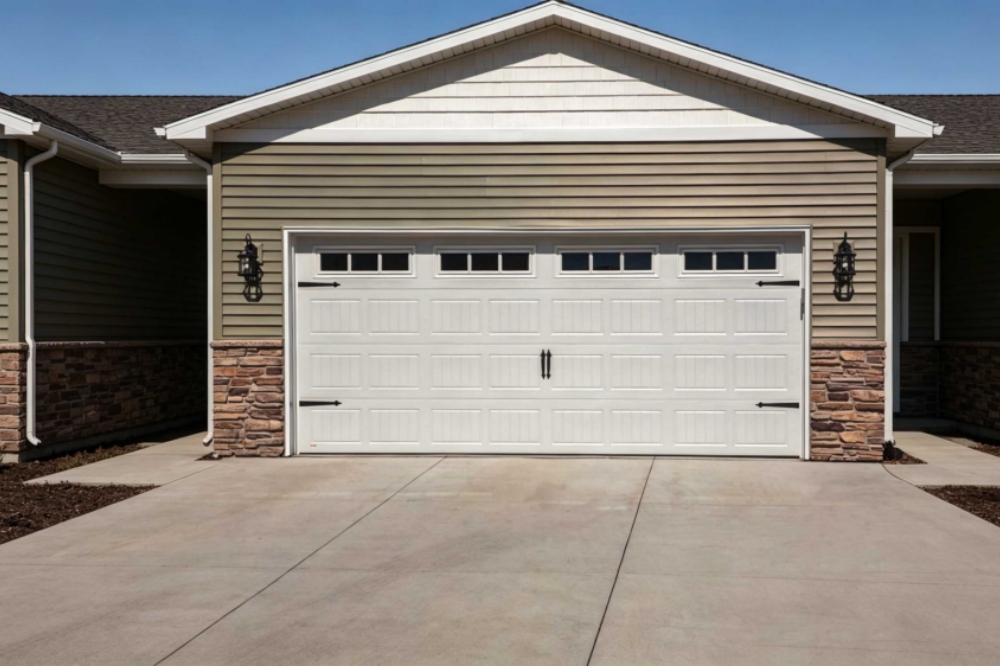
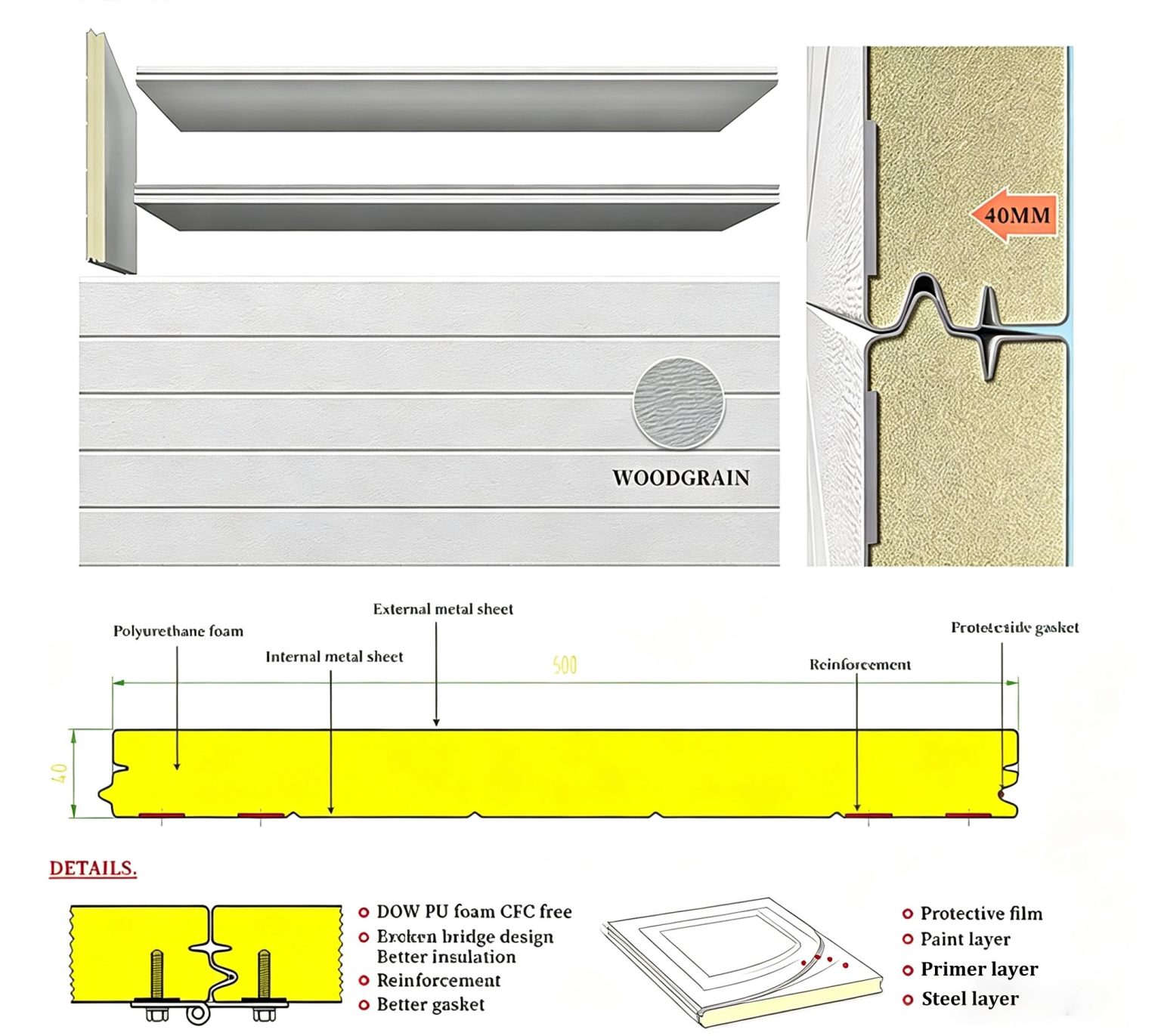
Among the three door types discussed here, a galvanized steel sectional garage door will usually provide the strongest overall insulation package. Its advantage comes from the sandwich-panel structure.
The outer and inner steel skins enclose a layer of polyurethane foam. During production, the foam expands inside the panel and fills the available cavity. Once cured, it forms a dense insulating core and bonds with the steel skins. This construction helps reduce heat transfer while also improving panel rigidity and resistance to flexing.
Polyurethane foam is particularly useful where the garage is heated or cooled, where winter temperatures are low, or where the door is exposed to strong sunlight. Panel thickness, foam density, panel joints, and sealing details will all affect the final result, so the complete specification should be checked rather than judging the door by appearance alone.
Insulated Windows in a Steel Garage Door
Windows do not have to remove the benefit of an insulated steel door. For better thermal performance, the window section can use an insulated glass unit filled with argon gas.
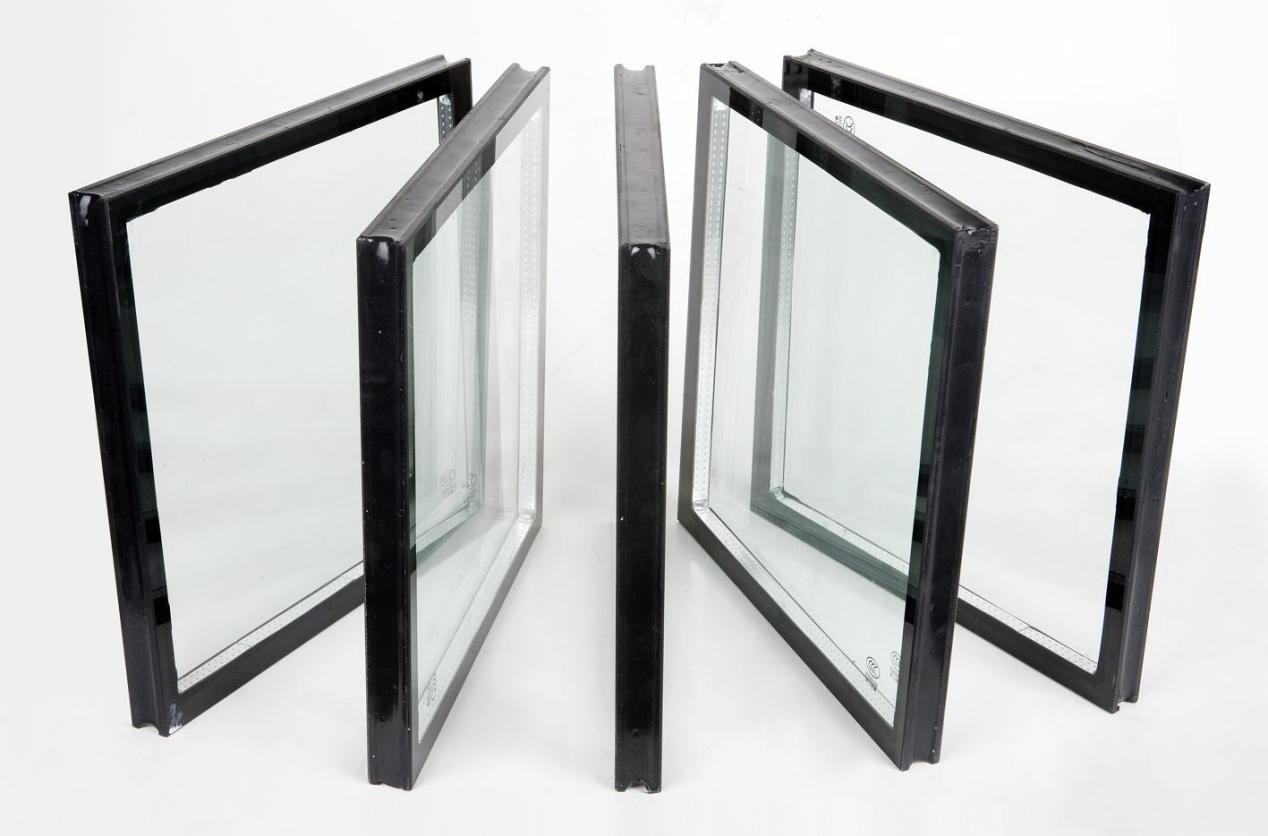
An insulated glass unit contains two panes separated by a sealed spacer. The cavity between them is filled with argon, which transfers heat less readily than ordinary air. This helps reduce heat movement through the window and can lower the likelihood of interior condensation under suitable conditions.
The result is a practical balance: natural light and a more attractive facade without relying on single-pane glass. For customers whose main priority is temperature control, an insulated steel door with argon-filled double glazing is generally the first configuration to consider.
2. Aluminum Glass Garage Doors
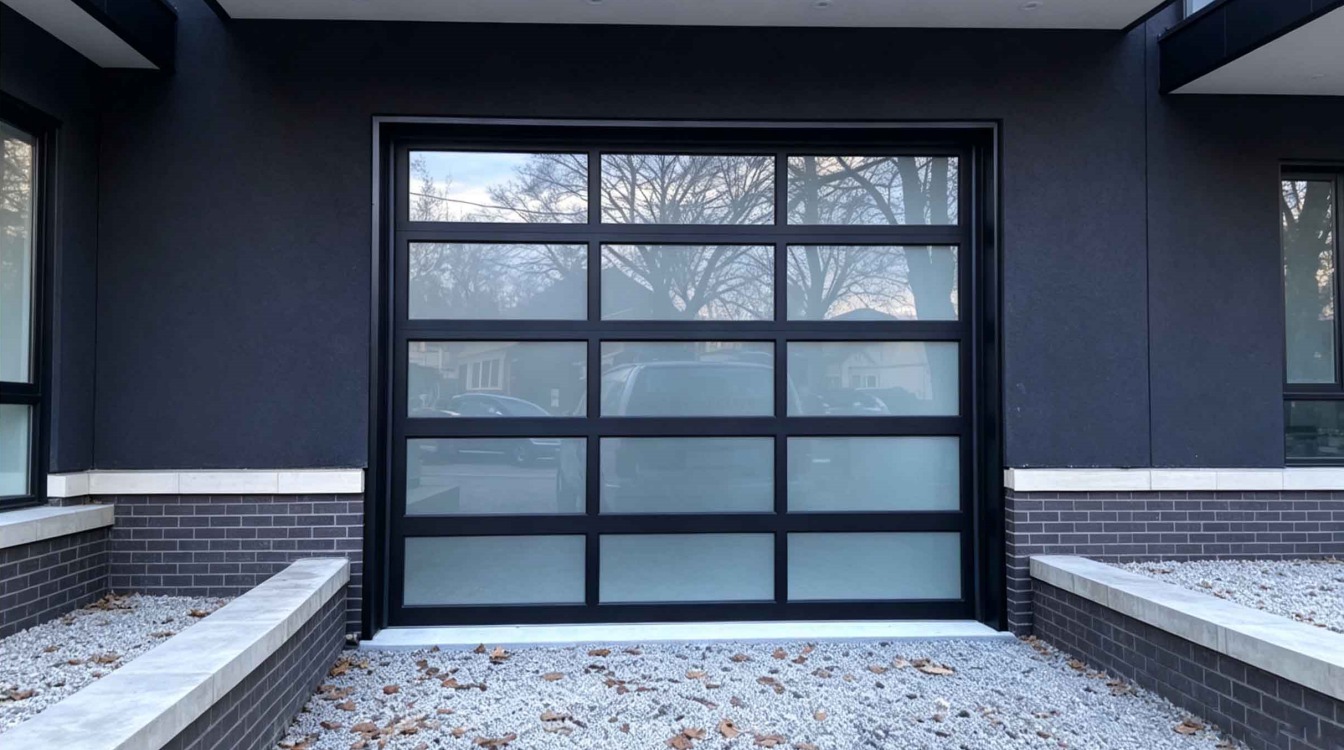
Aluminum glass garage doors are popular when visibility, daylight, and a modern architectural appearance are important. They are often selected for car showrooms, restaurants, studios, service centers, and contemporary homes. Their thermal performance, however, depends heavily on the selected frame and glass configuration.
A basic aluminum frame with single glazing provides limited insulation. Aluminum is a strong and lightweight framing material, but it also conducts heat efficiently. Large glass areas can create another route for heat gain or loss. For that reason, an aluminum full-view door intended for a conditioned space requires a more carefully developed specification.
Filling the Aluminum Frame With Polyurethane Foam
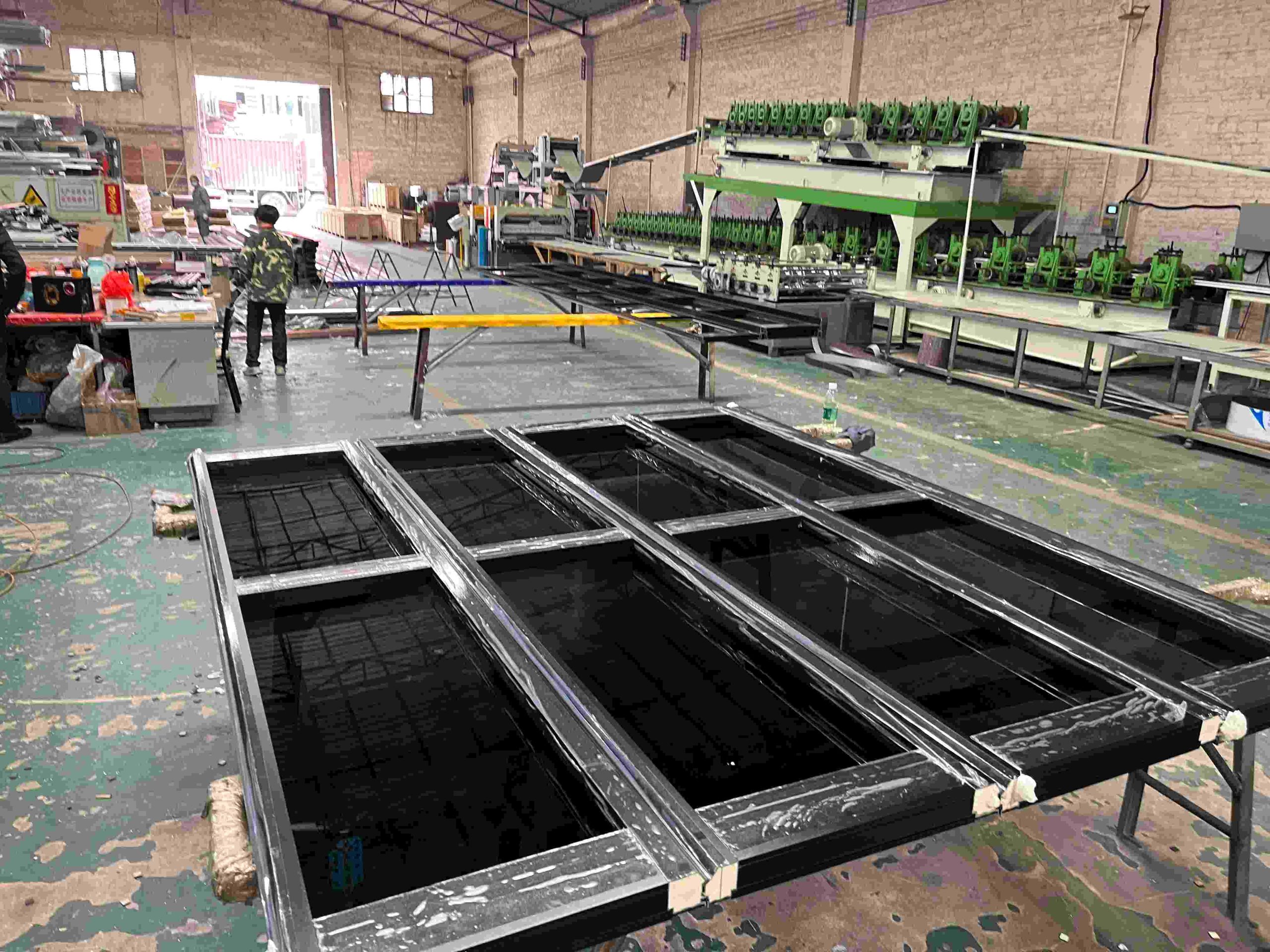
One way to improve performance is to fill suitable cavities inside the aluminum door frame with polyurethane foam. The foam reduces open air space within the sections and adds a layer of thermal resistance. Where available for the chosen profile system, a thermally improved or thermally broken frame can further reduce direct heat flow through the aluminum.
Frame filling should be treated as part of an engineered door system. Drainage paths, fastener locations, hardware clearances, and the structural function of the extrusion must remain intact. The exact method therefore depends on the frame profile and the manufacturer's design.
Using Argon-Filled Insulated Glass
The second major improvement is to replace single glazing with argon-filled insulated glass. Two panes, a sealed cavity, appropriate spacers, and argon gas create a more effective barrier than a single sheet of glass. Low-emissivity glass may also be considered when solar heat gain or radiant heat transfer is a concern.
This upgraded construction improves comfort near the door and makes a full-view design more suitable for spaces with heating or air conditioning. It does, however, introduce an important engineering consideration: weight.
Why Heavy-Duty Hardware Is Necessary
Insulated glass is substantially heavier than single glazing, and foam-filled frame sections can add more mass. As the total door weight increases, the load on the tracks, rollers, hinges, cables, springs, brackets, and operator also increases.
For a large or heavily glazed insulated door, a heavy-duty 3-inch hardware system may be required. The springs must be correctly calculated for the actual finished door weight, and the track layout, cable drums, shaft, bearings, fasteners, and opener should be selected as one coordinated system. Simply upgrading one component does not make the complete assembly suitable for the added load.
Because every opening has different dimensions and operating conditions, the final hardware specification should be confirmed by the door manufacturer or a qualified installer.
3. Flush-Mount Clad Garage Doors With an Insulated Backing
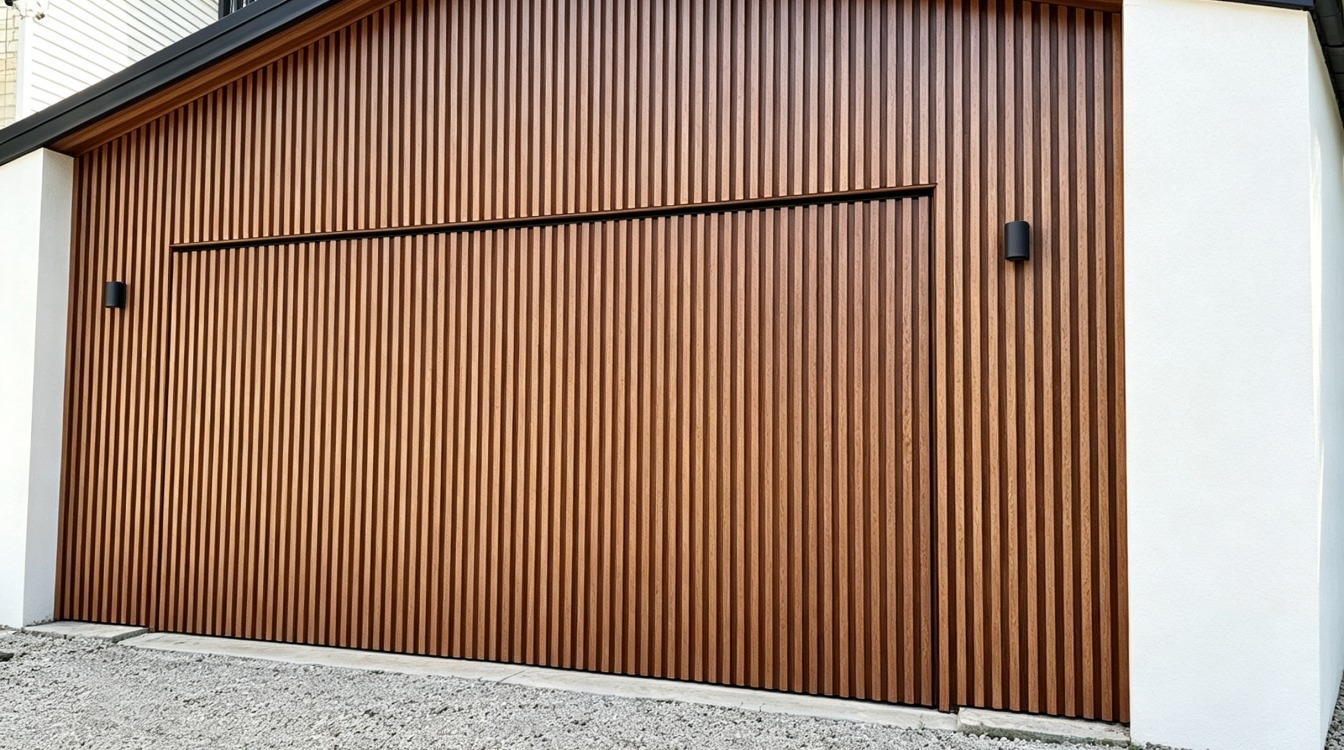
A flush-mount clad garage door creates a clean, integrated architectural finish. The visible flush-mount cladding panels are primarily decorative, so the insulation normally comes from the backing door behind them. There are two practical ways to build this type of door.
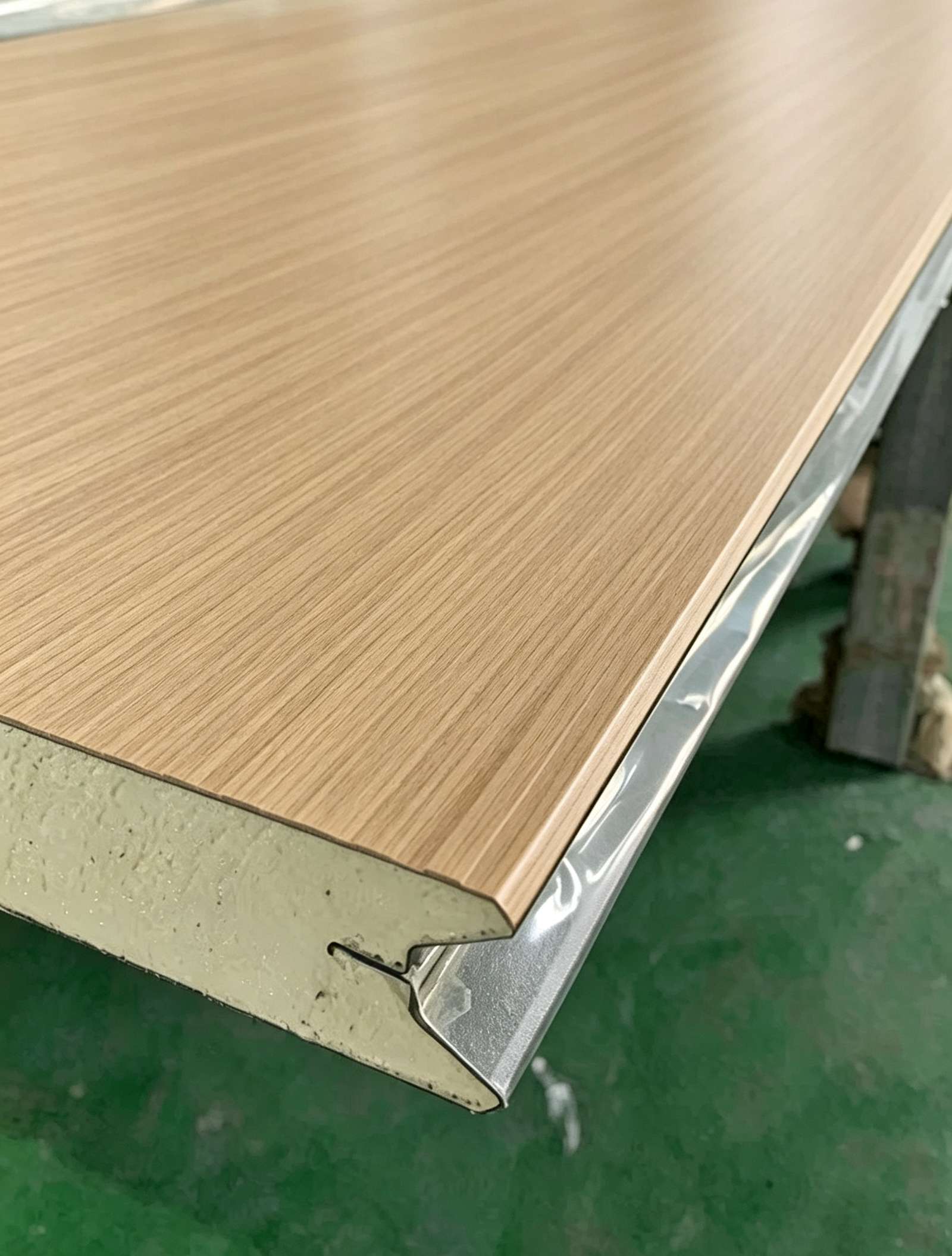
Option A: Galvanized Foam Panel Backing
The more budget-friendly solution uses a galvanized steel foam panel as the backing structure, with flush-mount cladding panels installed on the exterior as a decorative layer.
This approach combines the proven thermal performance of an insulated steel sandwich panel with the appearance of a flush-clad facade. It is often the most economical choice because the insulated backing can be produced using a conventional sectional-panel system. The exterior cladding panels then create the desired visual effect without requiring the entire backing structure to be made from aluminum.
This configuration is well suited to projects that need a warm, finished appearance while keeping material and production costs under control.
Option B: Foam-Filled Aluminum Panel Backing
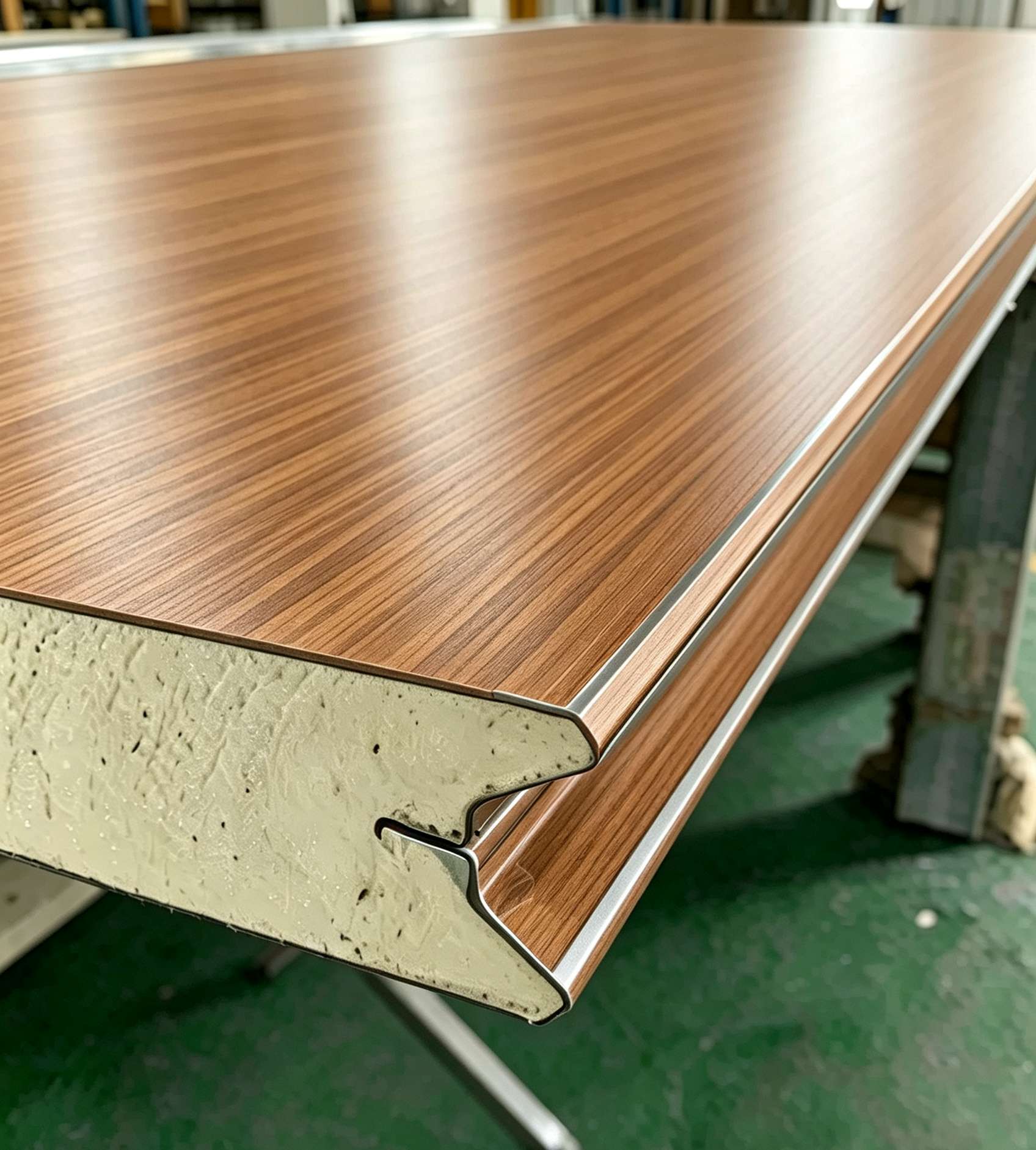
The second option uses an aluminum backing panel filled with insulating foam, followed by flush-mount cladding panels on the front.
This construction may be preferred when the project calls for an aluminum-based assembly, specific corrosion-resistance requirements, or closer coordination between the backing panel and the exterior finish. It can provide a clean, premium result, although the material and fabrication cost will usually be higher than a galvanized foam-panel backing.
As with an insulated glass door, the cladding and backing layers increase the total moving weight. The hardware and counterbalance system must be designed for the complete finished door, including every cladding component.
Comparing the Three Insulated Garage Door Options
| Garage door type | Main insulation method | Key advantage | Main consideration |
| Galvanized steel sectional door | Polyurethane foam core; optional argon-filled insulated windows | Typically the best thermal performance of these three configurations | Panel joints, seals, and glazing must match the insulation goal |
| Aluminum glass door | Foam-filled frame cavities and argon-filled insulated glass | Modern appearance, visibility, and natural light | Added glass weight requires properly engineered heavy-duty hardware |
| Flush-mount clad garage door | Insulated backing behind flush-mount cladding panels | Integrated architectural appearance with flexible construction options | Extra layers increase weight; aluminum backing generally costs more |
How to Choose the Right Insulated Garage Door
The right door depends on how the space is used.
Choose a galvanized steel sectional door when thermal performance, durability, and value are the leading priorities. It is especially suitable for heated garages, workshops, loading areas, and buildings in climates with large temperature differences.
Choose an aluminum glass garage door when daylight and visual openness are central to the design. Specify insulated glazing, consider a thermally improved frame, and ensure that the hardware is calculated for the heavier door.
Choose a flush-mount clad garage door when the exterior design requires a clean, integrated appearance. A galvanized insulated backing is usually the more cost-effective route, while a foam-filled aluminum backing offers another option for projects with particular material or finish requirements.
In every case, accurate dimensions, local climate, wind load, opening frequency, exposure, and the building's heating or cooling requirements should be reviewed before production. A well-insulated panel cannot compensate for poor seals, unsuitable hardware, or an incorrect installation.
Frequently Asked Questions
Which type of garage door offers the best insulation?
Of the three configurations covered here, a polyurethane-filled galvanized steel sectional door will typically offer the strongest thermal performance. Argon-filled double-glazed windows can be added when natural light is required.
Can an aluminum glass garage door be insulated?
Yes. Thermal performance can be improved by filling suitable aluminum frame cavities with polyurethane foam and using argon-filled insulated glass. A thermally improved frame system can provide an additional benefit where available.
Why does an insulated glass garage door need stronger hardware?
Double glazing and upgraded frame construction add weight. The tracks, rollers, hinges, cables, springs, shaft, brackets, and opener must all be rated and configured for the actual finished door. Large doors may require a heavy-duty 3-inch hardware system.
What is the most economical way to insulate a flush-mount clad garage door?
A galvanized polyurethane-foam panel used as the backing, with flush-mount cladding panels installed on the front, is generally the more cost-effective of the two constructions described here.
Does argon gas improve garage door window insulation?
Yes. In a properly sealed insulated glass unit, argon reduces heat transfer through the cavity between the panes compared with ordinary air. Overall performance also depends on the glass type, spacer, frame, seals, and quality of installation.
Build the Door as a Complete Thermal and Mechanical System
Good garage door insulation comes from coordinating materials rather than selecting one upgraded component. The panel core, glass, frame, seals, hardware, counterbalance system, and installation all work together.
For the highest insulation priority, a polyurethane-filled galvanized steel sectional door with argon-filled insulated windows is usually the most direct solution. An aluminum glass door can achieve better thermal performance with foam-filled frame cavities and insulated glazing, provided that the added weight is supported by the correct heavy-duty hardware. For a flush-mount clad design, either a galvanized insulated backing or a foam-filled aluminum backing can combine thermal control with the required architectural appearance.
Before ordering, request a project-specific door configuration based on opening size, climate, glazing area, operating cycles, wind requirements, and desired finish. That approach produces a door that looks right, operates reliably, and delivers the insulation performance the building actually needs.