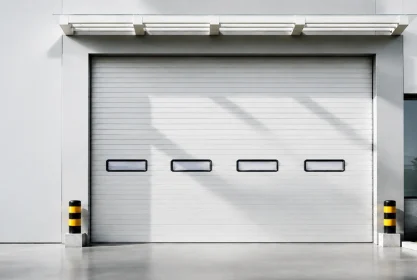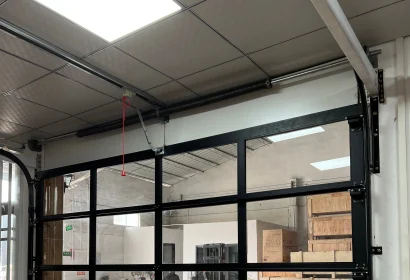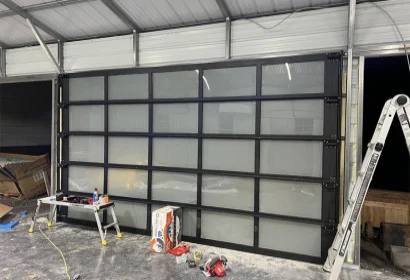
All Types of Garage Doors: A Complete 2026 Guide to Styles, Pros & Cons, and Best Uses
Choosing the right garage door is one of the most impactful home improvement decisions for residential and commercial properties alike. A high-quality garage door boosts curb appeal, enhances home security, improves energy efficiency, and even increases property value. With dozens of garage door types varying by opening mechanism, material, style, and functionality, many homeowners and business owners struggle to pick the perfect option for their space.
In this comprehensive guide, we break down every type of garage door on the market, including their working principles, key advantages, disadvantages, ideal applications, and maintenance needs. Whether you’re searching for residential sectional doors, heavy-duty commercial roll-up doors, or classic side-hinged garage doors, this guide covers all details to help you make an informed purchase.
Main Types of Garage Doors by Opening Mechanism
Garage doors are primarily categorized by their opening and operating mechanism. Each design features unique space-saving capabilities, operational styles, and compatibility with different garage layouts. Below are the six core garage door types widely used in 2026 residential and commercial construction.
1. Sectional Garage Doors (Most Popular Residential Type)
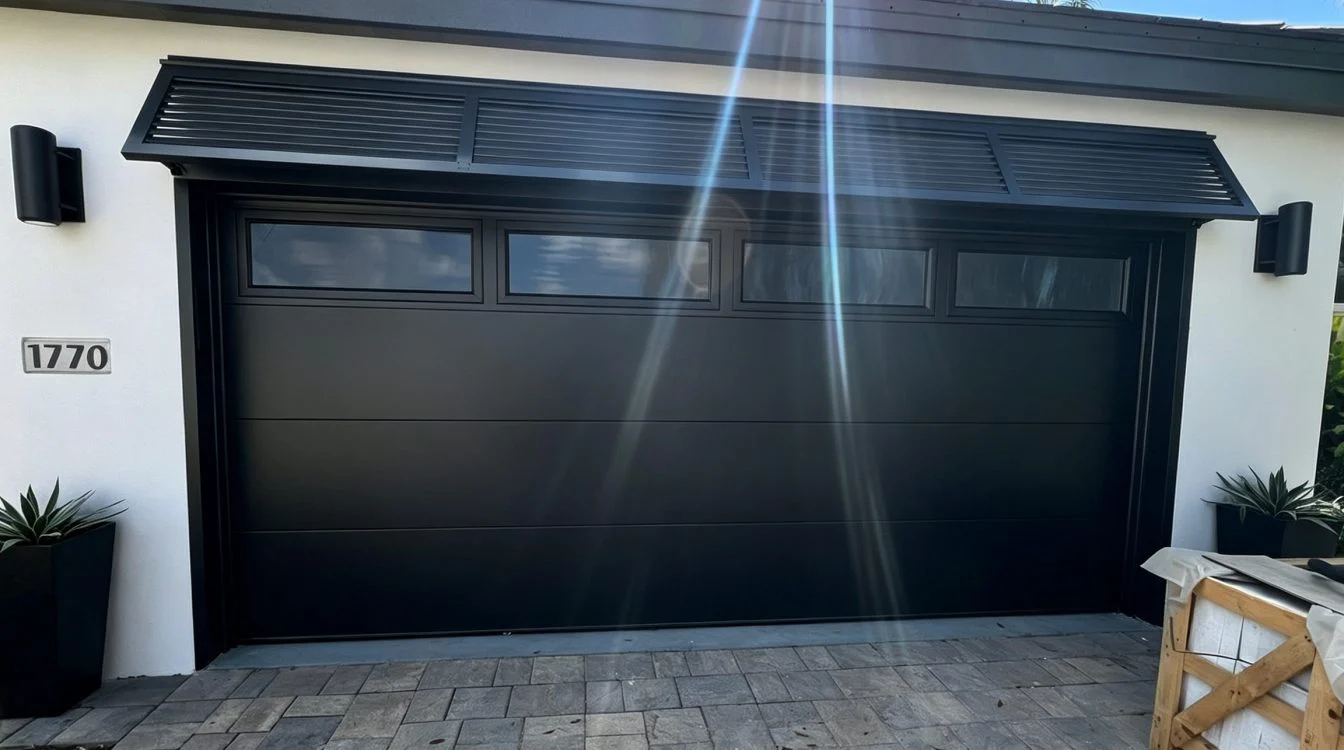
Sectional garage doors are the most common and versatile option for modern homes, accounting for over 60% of residential garage door installations. These doors consist of multiple horizontal panel sections connected by durable hinges. When opening, the door panels glide smoothly along vertical and horizontal tracks, curving upward to rest parallel to the garage ceiling, fully maximizing floor and driveway space.
Key Pros
-
Superior space efficiency: No outward swing or protruding parts, allowing full use of driveway space even with vehicles parked close to the garage
-
Excellent energy efficiency: Most sectional doors feature insulated foam cores, effectively blocking outdoor heat and cold to stabilize indoor garage temperatures
-
High customization: Available in countless colors, window designs, panel textures, and finishes to match any home exterior style
-
Smart compatibility: Seamlessly works with all modern garage door openers, smart remote control systems, and safety sensor devices
-
Enhanced security: Sturdy panel structure and tight sealing prevent unauthorized entry and resist wind damage
Key Cons
-
More moving parts (hinges, rollers, tracks) require routine minor maintenance and occasional tune-ups
-
Slightly higher upfront cost than basic tilt-up or single-panel doors
Best For: Standard attached/detached residential garages, suburban homes, townhouses, and light commercial workshops. Requires 12–15 inches of headroom for proper installation.
2. Roll-Up / Coiling Garage Doors (Top Commercial Choice)
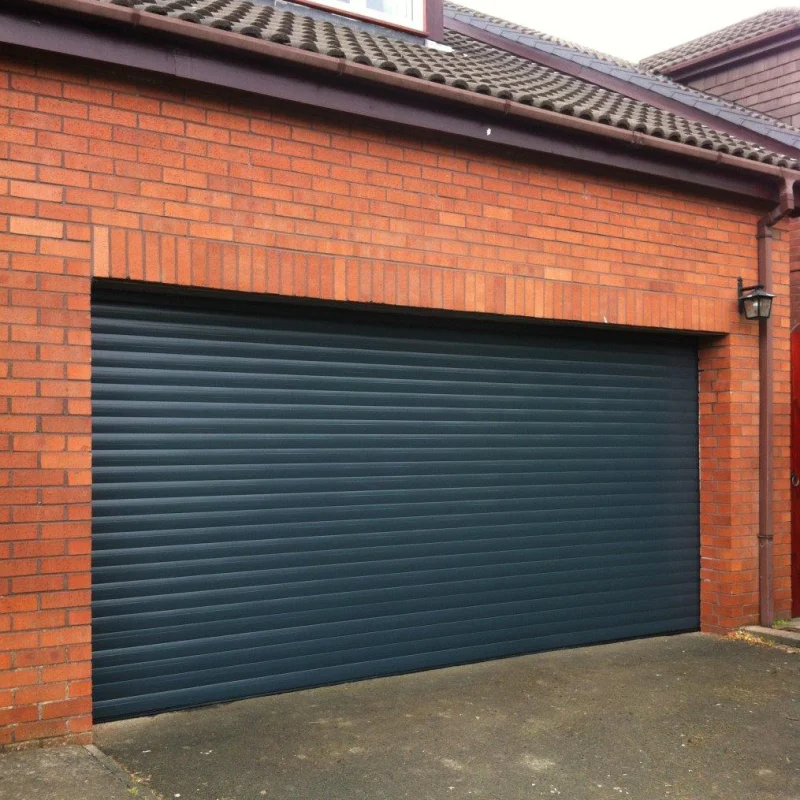
Roll-up garage doors (also called coiling garage doors) are engineered for heavy-duty, high-frequency use. Unlike sectional doors, they feature a flexible steel or aluminum curtain that coils tightly into a compact overhead drum when opened. This ultra-compact storage design makes them ideal for spaces with limited ceiling or headroom.
Key Pros
-
Maximum space savings: Zero ceiling track occupation, perfect for garages with low ceilings, high storage racks, or overhead equipment
-
Extreme durability: Built to withstand thousands of daily open/close cycles, resistant to impact, rust, and harsh weather conditions
-
Low maintenance: Simple structure with fewer wearable parts, long service life, and minimal repair needs
-
High security: Solid metal curtain design deters break-ins and withstands strong winds and storms
Key Cons
-
Limited aesthetic customization options compared to sectional doors
-
Higher initial installation cost, overkill for low-usage residential garages
-
Basic roll-up models offer poor insulation, unsuitable for temperature-controlled garages
Best For: Commercial warehouses, retail storefronts, industrial workshops, parking garages, boat garages, and residential garages with extremely limited headroom.
3. Tilt-Up Garage Doors (Up and Over Doors)
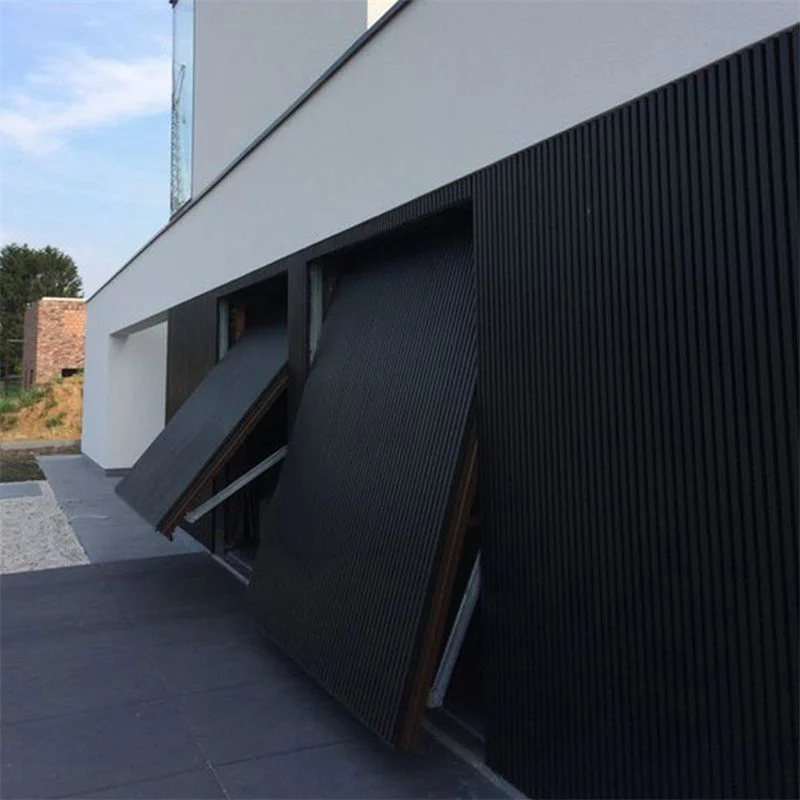
Tilt-up garage doors, also known as up-and-over doors, are single solid-panel doors that tilt upward and swing out to lift into the garage overhead space. They are divided into two sub-types: canopy tilt-up doors and retractable tilt-up doors, differing in installation structure and space requirements.
Canopy Tilt-Up Doors
The most affordable tilt-up option. When fully open, one-third of the door panel extends outward as a canopy, while the rest slides into the garage. It features a simple spring-loaded mechanism with no complex track systems.
Retractable Tilt-Up Doors
An upgraded version that fully retracts into the garage interior without external overhang. Equipped with side-mounted lifting arms and tension springs, it supports smooth remote control operation and is suitable for wider garage openings.
Key Pros
-
Simple, sturdy single-panel structure with fewer failure points
-
Budget-friendly purchase and installation cost
-
Fast installation and easy manual operation during power outages
Key Cons
-
Requires clear driveway clearance for outward tilting movement
-
Poor insulation performance, prone to air leakage
-
Limited design flexibility compared to sectional doors
Best For: Small residential garages, old-house renovations, budget-focused homeowners, and garages with standard ceiling height.
4. BI-fold Garage Doors (Swing-Out Doors)
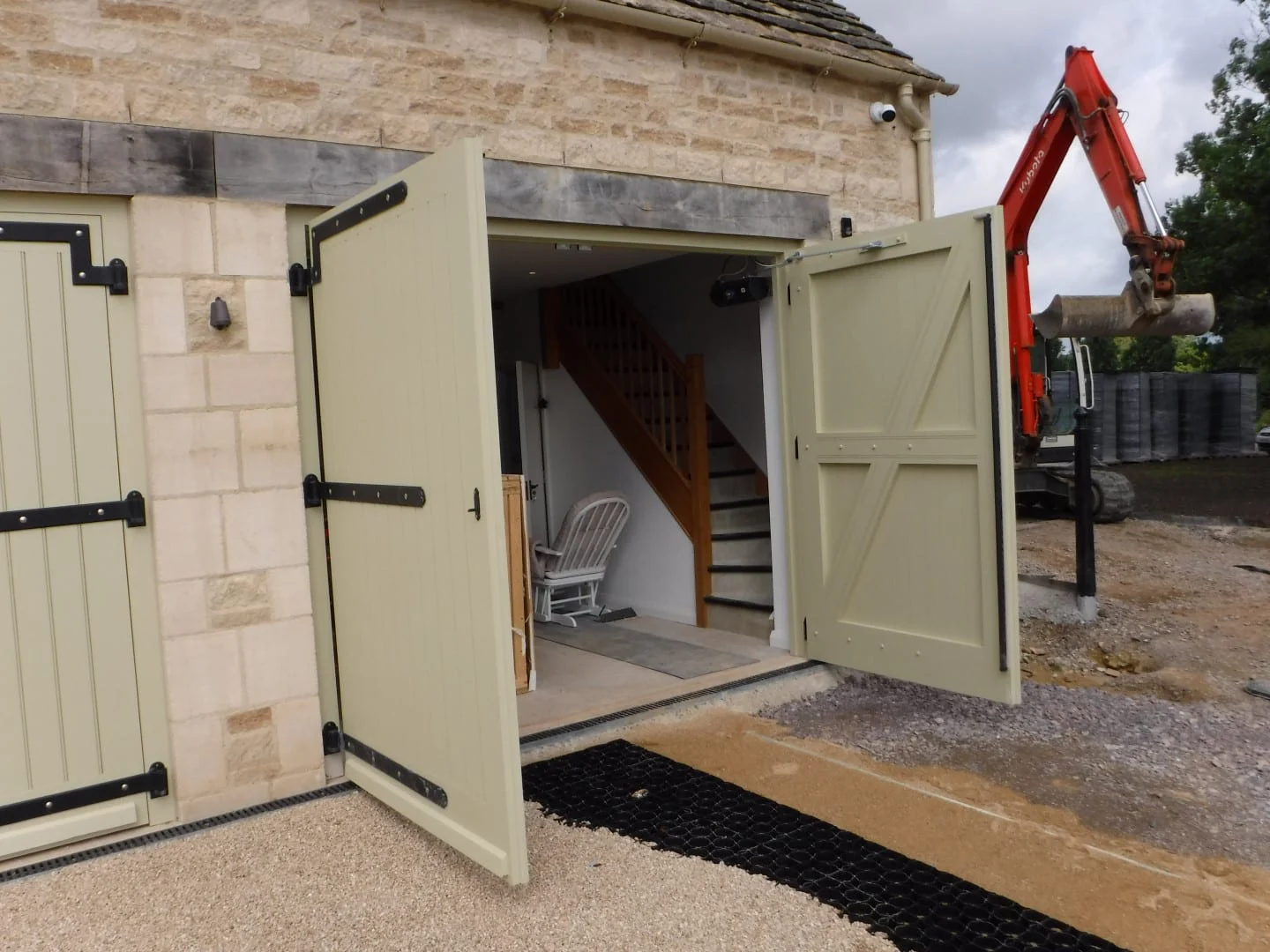
Side-hinged garage doors are traditional swing-style doors that open outward like standard house doors, featuring two hinged panels mounted on either side of the garage opening. This classic design has regained popularity for its rustic aesthetic and practical pedestrian access.
Key Pros
-
Super convenient pedestrian access: Open one panel partially for foot traffic without lifting the entire door, saving energy and reducing wear
-
Classic, elegant curb appeal: Perfect for traditional, farmhouse, and cottage-style homes
-
Low operational space requirements: No ceiling track or overhead space needed
-
Reliable and low-maintenance: Simple hinge and latch structure with minimal mechanical failures
Key Cons
-
Requires clear side and front space for outward swinging
-
Not compatible with standard overhead garage door openers (specialized swing-door openers required)
-
Average insulation and wind resistance performance
Best For: Heritage homes, rural properties, garages used frequently for pedestrian entry, and properties with limited ceiling space.
5. Slide-to-Side Garage Doors
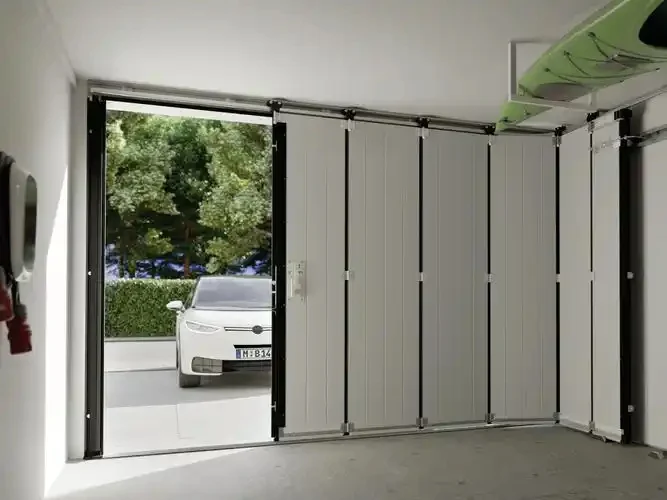
Slide-to-side garage doors operate by sliding horizontally along wall-mounted tracks to one side of the garage opening, instead of lifting upward. This unique horizontal sliding mechanism is designed for spaces with unconventional structural limitations.
Key Pros
-
No headroom required: Ideal for garages with extremely low ceilings, vaulted ceilings, or obstructed overhead spaces
-
Smooth quiet operation: Gentle horizontal sliding movement produces minimal noise and vibration
-
Partial opening function: Slide the door partially open for easy access and ventilation
-
Durable structure: Less stress on panels than lifting doors, extending service life
Key Cons
-
Requires clear wall space on one side of the garage opening
-
Higher custom installation cost than standard sectional doors
-
Fewer style and color customization options
Best For: Garages with low ceilings, attic-over-garage layouts, custom-built garages, and spaces with overhead structural obstructions.
6. Walk-Through Garage Doors
Walk-through garage doors are a specialized hybrid design integrated with a small pedestrian door on the main garage door panel. They eliminate the need to open the entire heavy garage door for daily foot traffic, combining vehicle access and pedestrian convenience in one unit.
Key Pros
-
Greatly reduces door wear and tear from frequent full opening
-
Improves energy efficiency by minimizing air exchange
-
Enhances daily convenience for homeowners
Key Cons
-
Higher manufacturing and installation cost
-
Slightly reduced structural rigidity compared to solid-panel doors
Best For: Residences with frequent pedestrian garage access, home workshops, and multi-purpose garage spaces.
Garage Door Types by Material (Full Material Guide)
Beyond operating mechanisms, garage door material directly determines durability, insulation, aesthetics, maintenance needs, and price. Below are the six most common garage door materials and their core features.
1. Steel Garage Doors (Most Durable & Low-Maintenance)
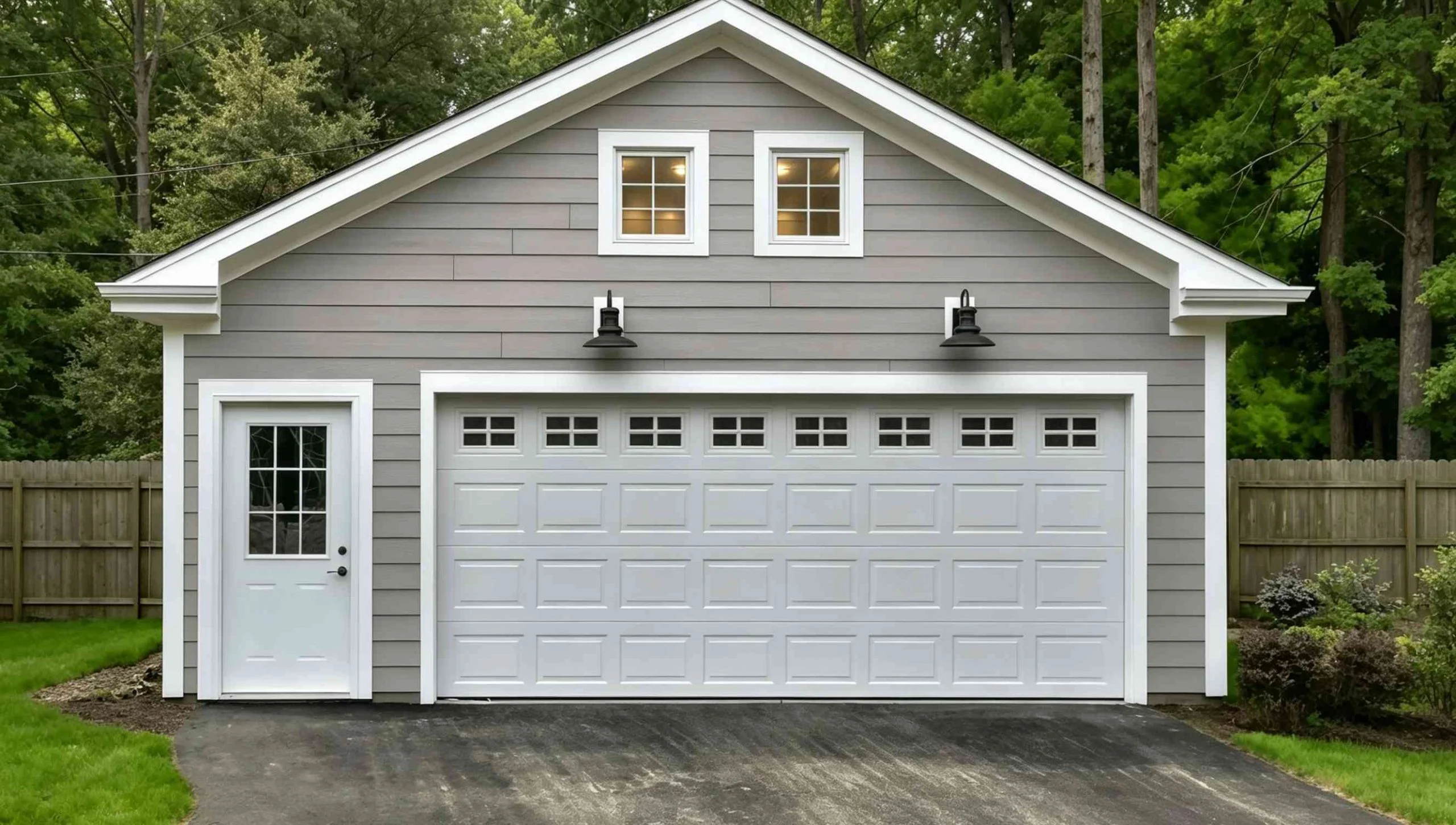
Steel is the top choice for residential and commercial garage doors. It features exceptional sturdiness, impact resistance, and wind resistance. Insulated steel doors with polyurethane foam cores deliver outstanding thermal insulation and noise reduction. Steel doors require almost no daily maintenance, resisting rust, fading, and warping. They are available in matte, glossy, wood-grain, and custom painted finishes.
Ideal for: All residential properties, commercial buildings, storm-prone areas, and users seeking low-maintenance solutions.
2. Aluminum Garage Doors (Lightweight & Rust-Proof)
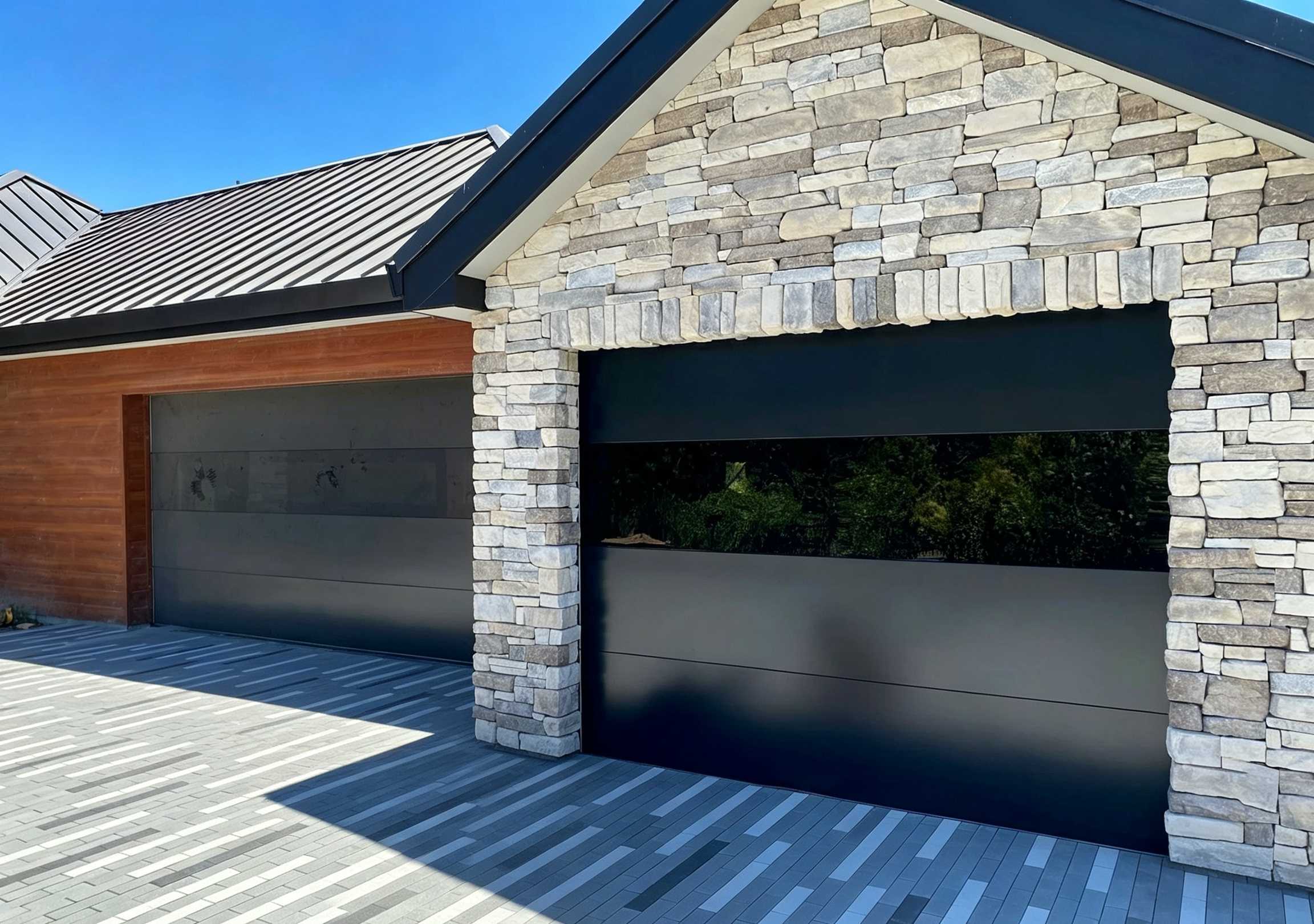
Aluminum garage doors are ultra-lightweight, completely rust-proof, and corrosion-resistant, making them perfect for coastal and humid climates. Most modern aluminum doors adopt a glass-panel combination design, delivering a sleek, modern, and minimalist aesthetic. However, pure aluminum panels are softer and more prone to dents than steel.
Ideal for: Modern-style homes, coastal properties, contemporary commercial storefronts, and glass-panel garage door designs.
3. Wooden Garage Doors (Premium Aesthetic & Customizable)
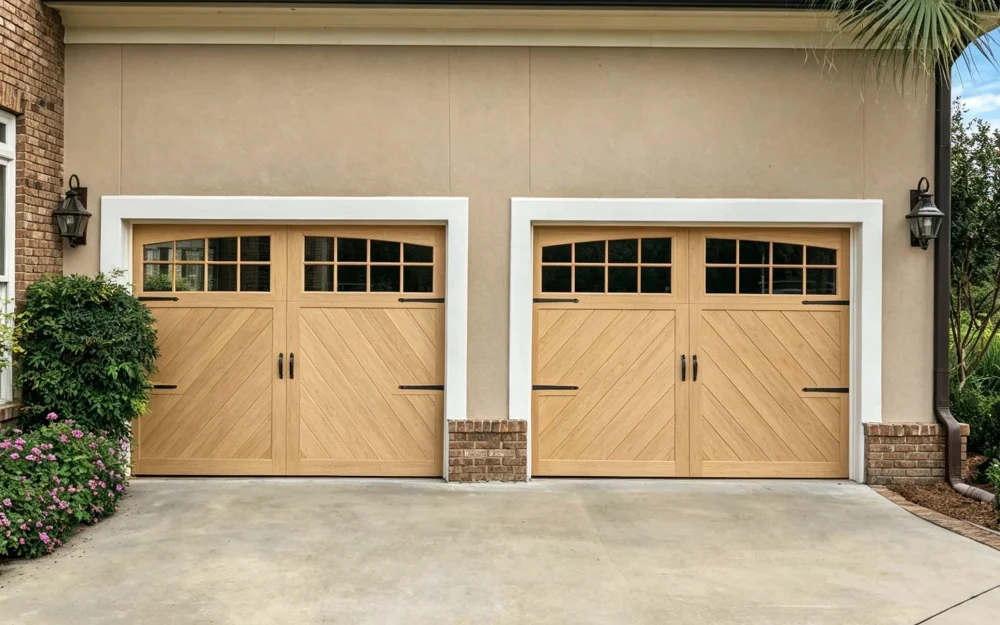
Wooden garage doors (cedar, fir, redwood, and plywood) offer unbeatable natural texture and high-end curb appeal. They are fully customizable in size, carving, and finish, perfectly matching farmhouse, traditional, and luxury home styles. Wood provides excellent natural insulation but requires regular staining or painting to prevent rotting, cracking, and insect damage.
Ideal for: Luxury residences, heritage homes, custom-built properties, and homeowners prioritizing unique aesthetics.
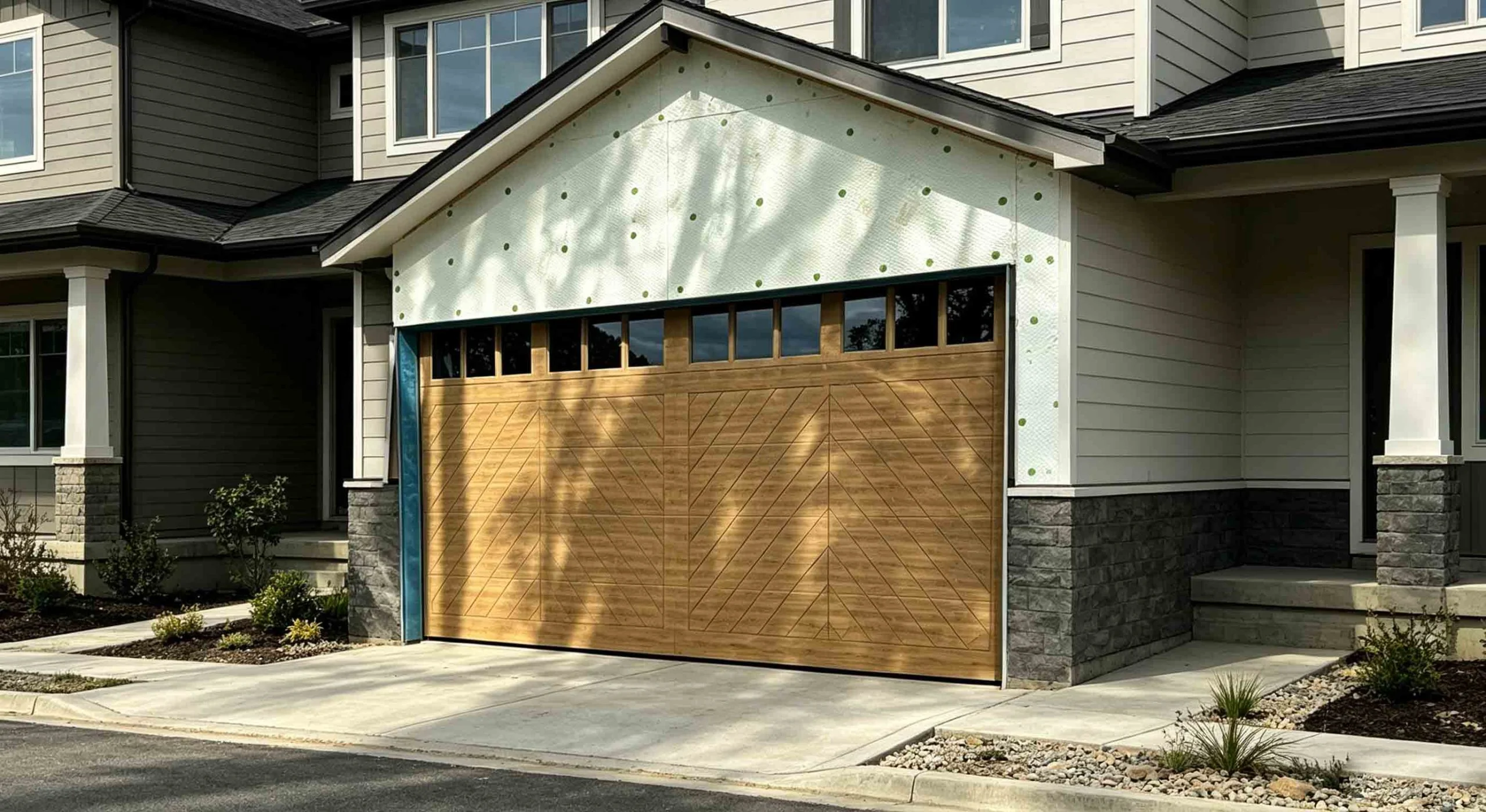
4. Composite Garage Doors (Wood Look + Low Maintenance)
Composite doors are made of synthetic wood composite materials, combining the natural wood texture of wooden doors with the durability of steel doors. They resist rotting, warping, and fading, require minimal maintenance, and are more affordable than solid wood doors. They are the best middle-ground option for users who love wood aesthetics but want to avoid high maintenance costs.
Ideal for: Homeowners wanting wood-style beauty with long-term low maintenance.
5. Fiberglass Garage Doors (Lightweight & Weather-Resistant)
Fiberglass garage doors are ultra-lightweight, UV-resistant, and weatherproof, not prone to fading or cracking under long-term sun exposure. They feature good translucency and can diffuse natural light evenly into the garage. The main drawback is lower impact resistance, making them easy to crack under strong collision.
Ideal for: Sunny high-temperature areas, light-use residential garages, and decorative garage door applications.
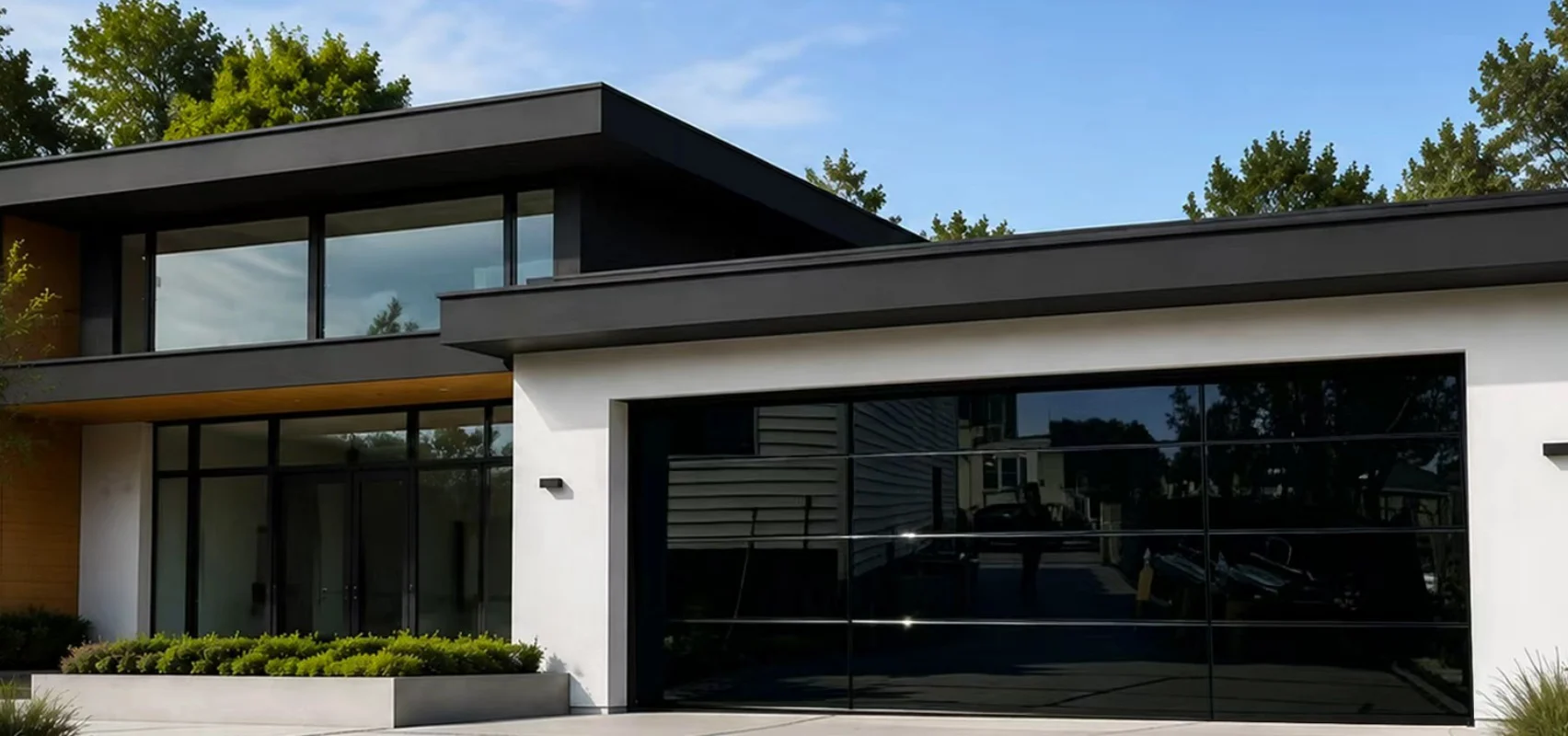
6. Glass & Aluminum Full-View Garage Doors (Modern & Stylish)
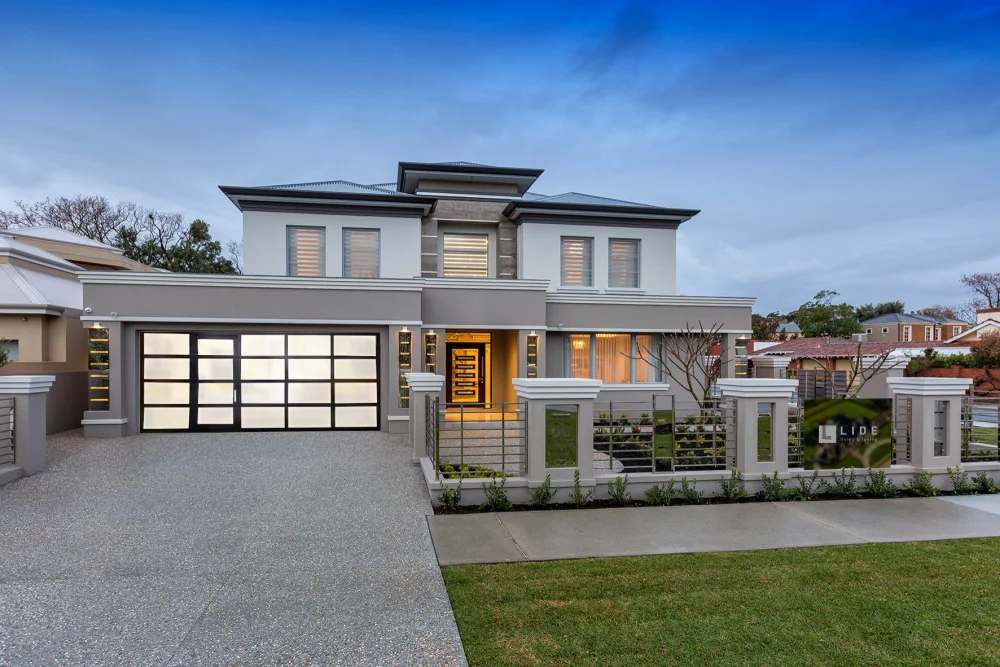
Full-view glass garage doors adopt an aluminum frame with tempered glass panels (clear, frosted, tinted). They deliver a fully transparent, high-end modern look, maximizing natural light entry. They are widely used for modern homes, gyms, cafes, and retail storefronts. Insulated glass options can effectively solve heat transfer issues.
Ideal for: Modern architecture homes, commercial display spaces, and decorative garage door needs.

How to Choose the Right Garage Door Type (Key Buying Factors)
With so many garage door options, use these critical factors to narrow down your best choice and avoid costly mistakes:
1. Garage Space & Layout
Check ceiling headroom, side wall space, and driveway clearance. Sectional doors suit standard layouts; roll-up/slide-to-side doors fit low-ceiling spaces; side-hinged/tilt-up doors need sufficient front clearance.
2. Usage Scenario (Residential vs Commercial)
Residential spaces prioritize aesthetics, insulation, and quiet operation (sectional, wooden, composite doors). Commercial spaces prioritize durability and high-frequency use (roll-up, heavy-duty steel doors).
3. Climate & Energy Efficiency Needs
Cold or hot climates require insulated sectional steel doors to reduce energy loss. Coastal areas need rust-proof aluminum or composite doors. Wind-prone areas need thickened steel impact-resistant doors.
4. Maintenance Budget
Low-maintenance options: Steel, aluminum, composite doors. High-maintenance options: Solid wood doors (annual staining/painting required).
5. Security Requirements
For high-security needs, choose thick insulated steel sectional doors or heavy-duty roll-up doors with anti-break-in structures.
Frequently Asked Questions (FAQs)
What is the most popular type of garage door?
Insulated sectional steel garage doors are the most popular option for 2026 residential homes, balancing aesthetics, energy efficiency, security, and affordability perfectly.
What type of garage door is most durable?
Heavy-duty steel roll-up doors and insulated sectional steel doors offer the longest service life and best resistance to wear, impact, and harsh weather.
Are wooden garage doors worth it?
Yes, for homeowners prioritizing curb appeal and property value. Wooden doors provide unmatched natural beauty but require annual maintenance to avoid damage.
What garage door is best for low ceilings?
Slide-to-side garage doors and compact roll-up coiling doors are the best solutions for garages with limited headroom.
Final Thoughts
Every garage door type serves a unique purpose, and the “best” option depends entirely on your garage layout, climate, usage habits, budget, and aesthetic preferences. Sectional doors remain the all-around best choice for most homeowners, while roll-up, side-hinged, slide-to-side, and tilt-up doors excel in specialized scenarios. By matching your space needs with the right door mechanism and material, you can enjoy a durable, energy-efficient, and stylish garage door for decades.
LIDE is garage door factory who Sticking to the philosophy of “Quality First, Customer Oriented, and Integrity-Based”, product includes steel garage door,glass garage door,aluminum garage door for modern house, we have won wide recognition and trust from homeowners, property developers, and commercial clients. If you are looking for a trustworthy garage door supplier and service team, we are your ideal choice for reliable products, competitive prices, and considerate after-sales service.
Garage door manufarurer Welcome to visit our website:https://www.lidegaragedoor.com/